
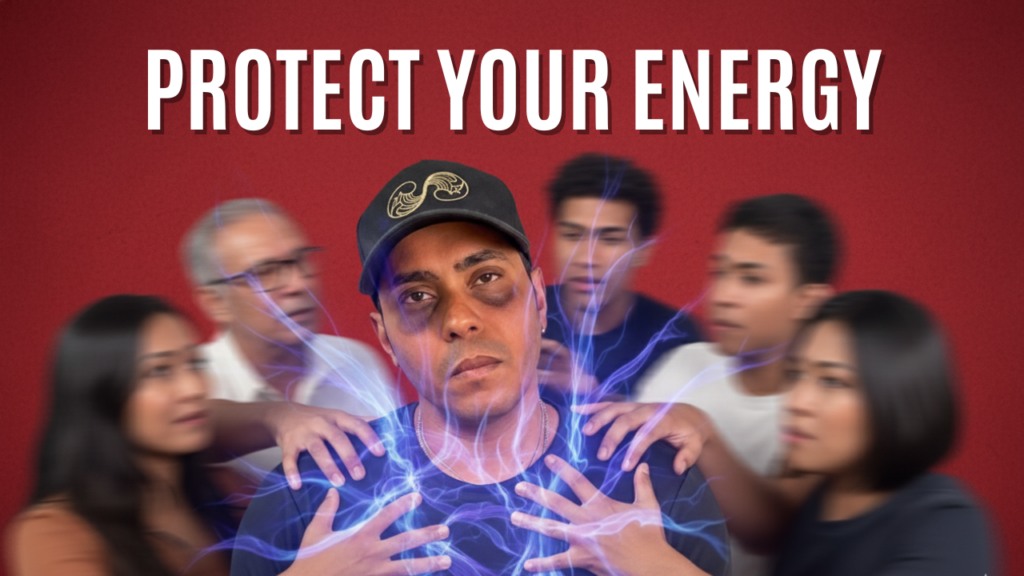
Have you ever come home from a social gathering or even just a trip to the grocery store feeling completely wiped out? Like someone literally vacuumed the life force right out of you?
If you’re nodding your head right now, you’re not alone. And no, there’s nothing wrong with you.
For years, I blamed myself. I thought I was “too sensitive,” “too much of a sponge,” or that I just needed to toughen up. I’d beat myself up for not being able to handle what seemed to come so easily to others.
But here’s what I’ve learned after 15+ years of working in productivity, time management, and energy optimization: The problem isn’t you. The problem is that no one ever taught you how to protect your energy in a world that constantly demands it.
Today, I’m sharing the exact strategies that transformed me from someone who could barely leave the house without feeling emotionally drained to someone who can navigate the chaos of modern life while actually preserving (and even replenishing) my energy.
Table of Contents
- Why You’re Not “Too Sensitive” – You’re Just Unprotected
- The Brutal Truth About Energy Vampires
- Step 1: Control What You Can – Strategic Avoidance Isn’t Weakness
- Step 2: The “Not Mine” Technique That Changed Everything
- Step 3: Setting Boundaries Without Guilt
- Step 4: The Recharge Protocol (Because You’re Not a Machine)
- The Savior Complex Trap (Especially for Coaches and Helpers)
- Conclusion: You Have the Right to Protect Your Peace
Why You’re Not “Too Sensitive” – You’re Just Unprotected
Let me be brutally honest with you: If you’re introverted or empathic, certain people and places will drain you. Period.
This isn’t a character flaw. It’s not something you need to “fix” about yourself. It’s simply how your nervous system works.
For the longest time, I struggled with this reality. I’d leave my house just to get some fresh air or run errands, and I’d return completely exhausted. Not just tired—utterly depleted. It would take me hours to recover from a simple trip to the store.
And the worst part? I felt guilty about it. Like I was failing at something everyone else found easy.
The breakthrough came when I realized: I was simply enduring my environment instead of actively protecting myself from it.
Whether it was aggressive drivers on the road, rude people in stores, or just the general chaos of crowded spaces, I was absorbing everything like a sponge with no filter.
The Brutal Truth About Energy Vampires
Here’s what most people won’t tell you: Energy vampires are real, and they’re everywhere.
I’m not talking about supernatural beings. I’m talking about:
- People who constantly complain but never take action
- Toxic coworkers who thrive on drama
- The chronically negative family member who sucks the joy out of every gathering
- Online trolls and critics who seem to exist solely to tear others down
- Crowded spaces filled with stressed, angry, or aggressive people
And here’s the thing that took me years to understand: Most of the time, it’s not personal. It’s never really about you.
When I started putting myself out there as an entrepreneur and content creator, I had to learn this lesson fast. At first, every criticism, every negative comment, every person who questioned my work—it all hit me personally.
But then something shifted. As my audience grew, so did the volume of feedback—both positive and negative. And at a certain point, I realized: I literally cannot respond to everything. There’s too much.
And you know what? That’s when I finally understood: The people who drain you are often draining everyone around them. You just happened to be in their path that day.
Step 1: Control What You Can – Strategic Avoidance Isn’t Weakness
The first step in protecting your energy is simple: Avoid what you can avoid.
I know, I know. It sounds too simple. But hear me out.
I’m fortunate enough (and I created this fortune myself) to be an entrepreneur with control over my schedule. This means:
- I don’t commute during rush hour. Ever. If I can help it, I’m not sitting in traffic surrounded by stressed, aggressive drivers.
- I grocery shop during off-peak hours. Middle of the afternoon on a weekday? That’s my time. Far fewer people, far less chaos.
- I limit my exposure to crowded public spaces. If I have to be in one, it’s strategic and temporary.
“But Johan,” you might be thinking, “I don’t have that luxury. I have a 9-to-5 job. I have responsibilities.”
I get it. And I’m not saying you need to restructure your entire life tomorrow. But ask yourself: What CAN I control?
Maybe you can’t avoid rush hour, but you can:
- Listen to calming music or podcasts during your commute
- Take a different, slightly longer route that’s less congested
- Use public transportation at slightly different times if possible
- Work from home one or two days a week
The point is: Stop accepting energy-draining situations as inevitable when you might have more control than you think.
And for those situations you truly can’t avoid? That’s where the next steps come in.
Step 2: The “Not Mine” Technique That Changed Everything
This is the game-changer. The absolute key to protecting your energy in situations you can’t avoid.
Learn to recognize what’s yours and what isn’t.
When someone cuts you off in traffic, that’s not about you. When a coworker snaps at you, that’s not about you. When a stranger is rude, that’s not about you.
They’re having their own experience. They’re dealing with their own stress, their own problems, their own emotional baggage. And you don’t have to carry it for them.
Here’s what I do now:
The Quick Release Practice
- Someone does something that would normally drain my energy
- I take a quick breath
- I literally say to myself (sometimes out loud): “Not mine.”
- I immediately redirect my attention to something else
It sounds almost too simple, right? But this phrase—”not mine”—has been absolutely transformative.
Because here’s what was happening before: I would absorb every negative interaction, every bit of aggression, every ounce of rudeness. And I would carry it with me for hours, sometimes days. I’d replay it in my mind, getting more upset each time.
Now? I acknowledge it, release it, and move on. Within seconds.
Turn It Into a Game
Here’s another trick that works surprisingly well: Gamify the experience.
When I absolutely have to deal with rush hour traffic or crowded spaces, I turn it into a challenge: How many times can I let things slide today? How quickly can I release what’s not mine?
It shifts my entire mindset from victim to observer. I’m no longer suffering through the experience—I’m training my brain to handle it better.
Step 3: Setting Boundaries Without Guilt
If you’re an empath or highly sensitive person, boundaries are your lifeline. But let me guess: You struggle with them, right?
You feel guilty saying no. You worry about disappointing people. You convince yourself that you should be able to handle more than you actually can.
Been there. Done that. Nearly burned out because of it.
Here’s what I’ve learned: Setting boundaries isn’t selfish. It’s self-respect.
There are four types of boundaries you need to master:
1. Time Boundaries
These are periods when you’re simply not available to others. No negotiations.
For me, this looks like:
- Mornings reserved for deep work (no meetings, no calls)
- Evenings reserved for rest and personal time
- Specific days blocked off for recovery after intensive work periods
2. Attention Boundaries
Moments when your focus is dedicated to one thing without distractions.
This means:
- Phone on Do Not Disturb
- Email closed
- No multitasking with people’s emotional demands
3. Energy Boundaries
Identifying and limiting exposure to people, situations, and activities that drain you.
This might mean:
- Limiting time with certain friends or family members
- Saying no to events that don’t align with your energy capacity
- Choosing smaller gatherings over large parties
4. Emotional Boundaries
Understanding what emotions are yours to process and what belongs to others.
This is especially crucial if you’re in a helping profession (coach, therapist, consultant, teacher).
The Boundary Rule That Changed My Business
I say no to clients when I don’t feel it’s a good fit.
This was revolutionary for me. Because early in my business, I would take anyone who wanted to work with me. After all, I wanted to help people! I wanted to make an impact!
But what I learned the hard way: Not everyone is meant to be your client. And trying to help people who aren’t aligned with you will destroy your energy and your passion for your work.
There are people who want you to save them. People who take and take but never implement. People who are never satisfied no matter what you do.
These are not your people. And spending energy on them means you have less energy for the people who actually value your work and take action.
Step 4: The Recharge Protocol (Because You’re Not a Machine)
Here’s the reality no one talks about enough: Your energy is not unlimited. You must recharge it deliberately.
Think about your phone. When the battery hits 20%, what do you do? You panic and immediately look for a charger, right?
But when YOUR energy hits 20%? Most people just push through. They ignore the warning signs. They convince themselves they can keep going.
This is a recipe for burnout.
How I Recharge (And How You Can Too)
Daily Recharge:
- 10-minute walks in nature (even just around the block)
- Brief meditation or breathing exercises
- Engaging in a hobby that has nothing to do with work
- Spending time with people who energize rather than drain me
Weekly Recharge:
- At least one full day of rest (and no, catching up on chores doesn’t count)
- Activities that bring me genuine joy, not just distraction
- Time in nature (this is non-negotiable for me)
Monthly/Seasonal Recharge:
- Longer retreats or getaways
- Complete disconnection from work and digital demands
- Deep rest and reflection time
The Nature Reset
I want to emphasize this because it’s been so powerful for me: Nature is medicine for depleted energy.
When I’m feeling overwhelmed, overstimulated, or drained, one or two days in nature—or even just an afternoon—does more for my energy than anything else.
If you’re feeling like your mind is overloaded, getting out of your head and into your body through nature is one of the fastest ways to recharge.
Professional Boundaries for Sustainable Energy
Since I work in a helping profession, I’ve had to get very strategic about managing my energy:
- I limit the number of one-on-one sessions I do each day. This ensures I can give my best to each person.
- I schedule sessions during times when I know my energy is naturally higher.
- I build in recovery time between intensive sessions.
- I have clear policies about what I will and won’t do for clients.
This isn’t about being difficult or unavailable. It’s about being able to show up as my best self for the people I serve.
The Savior Complex Trap (Especially for Coaches and Helpers)
If you’re a coach, therapist, teacher, consultant, or anyone in a helping profession, this section is critical.
The savior complex will destroy you.
I learned this the hard way. When I first started, I wanted to help everyone. I was enthusiastic, passionate, committed to changing the world.
And then I started encountering people who:
- Constantly complained but never took action
- Expected me to do the work for them
- Were never satisfied no matter what I offered (free or paid)
- Drained my energy with their lack mentality
Here’s the brutal truth: These are not your clients. And trying to save them will lead to burnout and resentment.
Lack attracts lack. People who are in a perpetual state of victimhood will drain you dry. They’re not looking for solutions—they’re looking for someone to carry their burden.
And that cannot be you.
How to Avoid the Savior Trap
- Be selective about who you work with. Not everyone is a good fit.
- Trust your gut. If something feels off about a potential client, it probably is.
- Set clear expectations. You’re there to guide, not to rescue.
- Remember: Their results are their responsibility, not yours. You can offer the tools, but they have to use them.
I’ve never met anyone who took on the savior role and had good outcomes. Not one.
Conclusion: You Have the Right to Protect Your Peace
Let me leave you with this: You have every right to protect your energy. You never have to justify it. You never have to apologize for it.
Setting boundaries is an act of self-respect. And when you respect yourself, others will respect you too. (And those who don’t? Well, they weren’t going to respect you anyway.)
The transformation I’m talking about doesn’t happen overnight. It’s a process. It takes practice, self-awareness, and consistent effort.
But I can promise you this: When you start implementing these strategies—avoiding what you can, releasing what’s not yours, setting firm boundaries, and deliberately recharging—you’ll feel lighter, calmer, more at peace, and far less drained.
It all starts with a decision. A decision that you will no longer allow your energy to be stolen. That you’re taking your energy back.
And that decision? That’s where your freedom begins.
What drains your energy most? What strategies have you found helpful for protecting yourself? Share your experience in the comments below—your insight might be exactly what someone else needs to hear.